
Total Cost of Ownership
BC Hydro: Indigenous Solar and Battery Pilots
By applying Total Cost of Ownership analysis, housing providers and Indigenous communities can pursue climate-aligned buildings that balance affordability, performance, and resilience across their full lifecycle.
Project Background
As climate change intensifies, the frequency of extreme events—such as flooding and power outages—underscores the need to embed resilience into building design. Yet these measures often require higher upfront investment and are rarely prioritized in conventional planning. Total Cost of Ownership (TCO) offers a comprehensive approach, evaluating long-term financial and climate impacts beyond initial capital expenditure.
A First Nation on Vancouver, BC’s north shore sought to develop a six-story, 50-unit affordable rental building designed to house intergenerational families. The Nation is committed to environmental stewardship and long-term operational savings and wished to explore ways to embed climate preparedness into the building’s design.
In 2023, Affine Climate Solutions was selected to conduct a TCO analysis for the project in collaboration with BC Hydro, building on BC Housing’s Integrated Building Adaptation and Mitigation Assessment (IBAMA) pilot under the Mobilizing Building Adaptation and Resilience (MBAR) program, which promotes climate-ready building design.
Affine's Expertise
To support informed choices during design, the TCO analysis assessed the full financial implications of low-carbon strategies, including capital costs, operations and maintenance, energy use, and equipment replacement cycles.
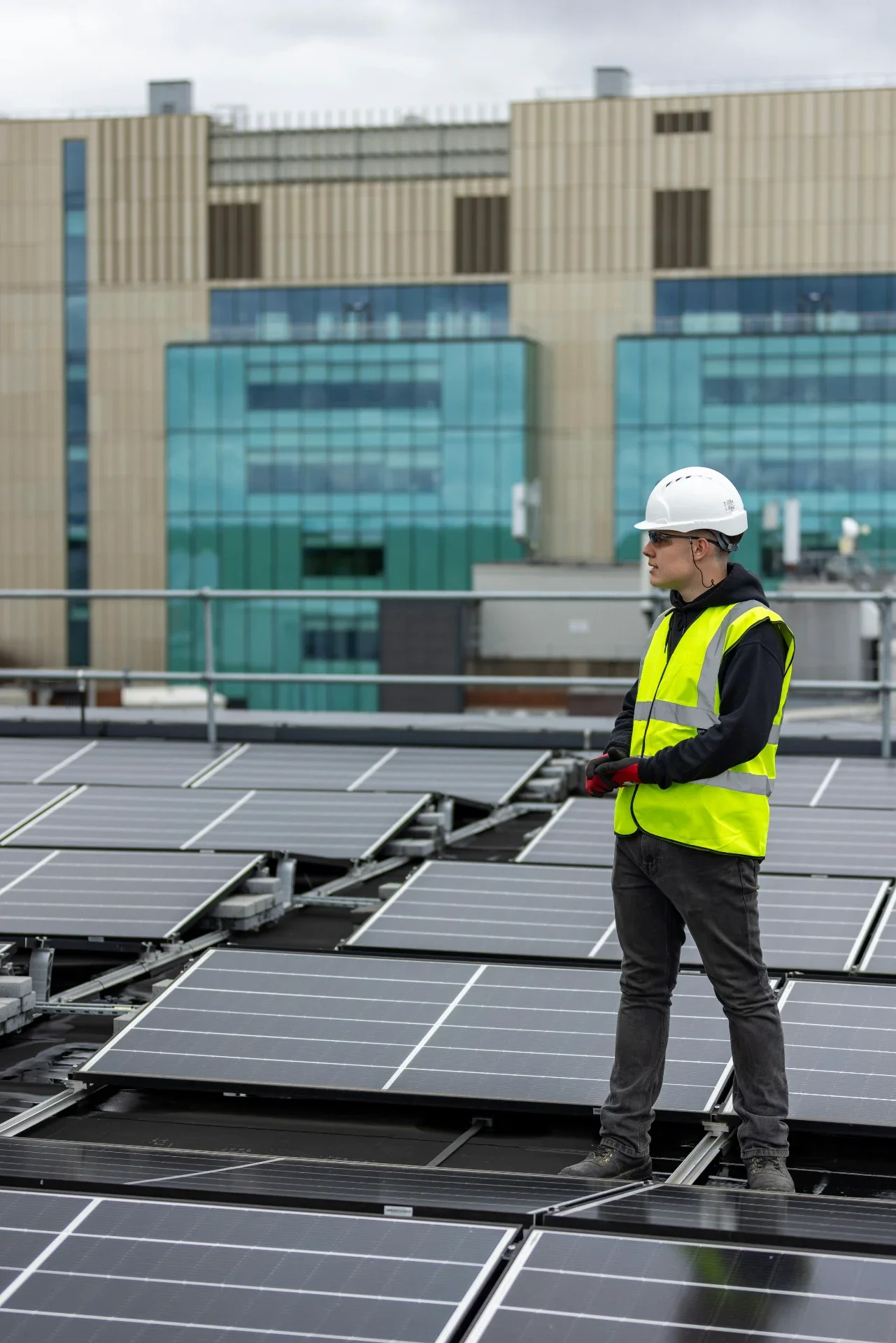
The building was designed to meet BC Energy Step Code 4, and includes a 60 kW rooftop solar PV system. The analysis revealed that integrating climate resilience measures can deliver both financial and operational benefits:
Energy Conservation Measures (ECMs)
BC Energy Step Code 4 provided a strong efficiency baseline. Additional upgrades yielded modest gains, with triple-glazed windows reducing electricity use by 4%. Other measures, such as wall insulation and ventilation enhancements, offered smaller benefits.
Emergency Energy Backup Systems
Resilience during outages was a central concern. Several options were compared across cost, emissions, and reliability:
Diesel generator: While capable of extended 72-hour backup, diesel systems pose environmental and financial drawbacks. Even unused, maintenance emissions totaled 40 tons of CO₂ over the building’s lifetime. Given local outages average 1.4 hours and occur less than once per year – with BC Hydro predicting an increase in outage frequency but not duration – the system would likely be underutilized.
Battery storage: Two battery configurations were assessed: 214 kWh (approximately 4 hours of backup) and 600 kWh (over 11 hours). Both offered lifecycle advantages over diesel, especially under Time-of-Use (TOU) pricing and peak-shaving opportunities. Batteries reduce fossil fuel dependence and benefit from future cost declines. A solar Power Purchase Agreement (PPA) model was explored alongside direct purchase, enabling comparison of ownership structures and allowing some upfront costs to be shifted to an external provider.
Hybrid systems: Combining diesel and batteries reduced generator runtime but retained diesel’s emissions profile and proved more expensive than standalone battery systems.
While diesel remains cheaper upfront, its long-term costs and carbon intensity make it less favourable, especially as battery technology declines in price and utility rates evolve.
Overall, battery-based systems—particularly the 214 kWh configuration—provide the best balance of cost, emissions reduction, and resilience. The rooftop solar system is expected to supply more than 13% of the building’s lifetime electricity demand. Pairing solar with battery storage could increase financial savings nearly 2.5x, through the combined effects of peak load management and Time-of-Use (TOU) electricity rates introduced by BC Hydro in 2024.
Key Takeaways
-

Energy Forecasting and Power Outage Risk Assessment
BC Hydro electricity pricing projections were used to estimate future utility savings and peak load management benefits, while historical power outage data informed backup system sizing, highlighting increased frequency risks.
-

Integrating Resilience Enhances Long-Term Performance
TCO modeling showed that measures like battery-ready infrastructure and solar PV could strengthen energy resilience and deliver financial value, especially under Time of Use electricity rates.
-

Efficiency and Renewables Pay Off
Investments in low-carbon measures can reduce operational and maintenance costs over time. Modeling identified significant potential lifetime energy cost savings from efficiency and renewable energy strategies.

“By applying Total Cost of Ownership, housing providers and Indigenous communities can pursue climate-aligned buildings that balance affordability, performance, and resilience across their full lifecycle.”

Magdalena Szpala
Director - Sustainability and Resilience
BC Housing